

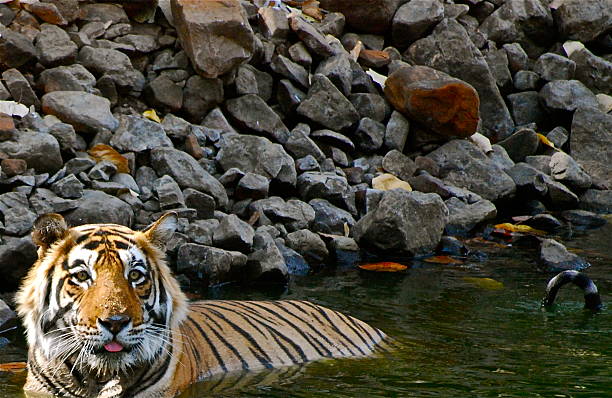
A New Chapter in Ranthambore’s Story
Every generation of Ranthambore tigers produces a breakout star, and Lightning (T-83) is the latest to claim that spotlight. This young tigress earned her name from a jagged, bolt-shaped stripe running along her left flank — a marking so distinctive that even novice trackers can identify her instantly. She has rapidly established herself as the dominant presence in Zone 6, centred around the picturesque Malik Talao.
Claiming Her Ground
What impressed wildlife researchers about Lightning was the speed with which she secured her own territory. Many young tigers spend years wandering as transients before finding unclaimed land. Lightning, however, moved into the Malik Talao region and asserted dominance within months. Her range encompasses:
- Malik Talao — the serene lake that serves as her primary hunting arena at dawn
- Adjacent grasslands — open patches where she rests through the afternoon heat
- Zone 6 forest corridors — a network of trails she patrols with clockwork regularity
A Specialist in Waterfront Ambushes
Lightning has developed a hunting technique that is uniquely her own. She conceals herself in the dense reeds at the edge of Malik Talao, waiting motionless as sambar deer approach the water to drink. When the moment is right, she launches forward with explosive acceleration, intercepting prey before they can react. Safari guides report that her success rate on these waterfront hunts is exceptionally high compared to typical ambush predators.
The Future of the Park
Zone 6 has seen a significant increase in tourist bookings since Lightning took up residence. Her comfort around vehicles and tendency to walk alongside safari tracks creates unforgettable close encounters. Wildlife monitoring teams expect her to produce her first litter soon — a milestone that would further cement the growing tiger population in Ranthambore’s buffer zones.
“Lightning is proof that Ranthambore’s story is far from over. Every new tigress who establishes territory here writes a fresh chapter in one of India’s greatest conservation achievements.”